
Gynecology · Pregnancy options
Surgical Abortion in Gangnam, Seoul: Procedure, Safety and the Law
A surgical (procedural) abortion ends a pregnancy by gently emptying the uterus, most often with vacuum aspiration, a short outpatient procedure usually done in the first trimester. In Korea, the criminal ban on abortion lapsed in 2021 and new legislation is still pending. At Hommage Clinic in Gangnam, Seoul, OB/GYN specialist Dr. Park Yuna offers confidential consultations to confirm your pregnancy and explain your options.
Quick answer
A surgical abortion(vacuum aspiration) empties the uterus in a short outpatient procedure, usually about 10–15 minutes, most often in the first trimester. In Korea, the criminal ban on abortion lost effect on 1 January 2021 and replacement legislation is still pending as of October 2026. At Hommage Women's Clinic in Gangnam, Seoul, female OB/GYN specialist Dr. Park Yuna offers confidential consultations with ultrasound to confirm and date a pregnancy and explain every option, without pressure.
Key takeaways
- When done by a trained doctor in early pregnancy, vacuum aspiration is safe; serious complications are uncommon.
- An ultrasound first confirms the pregnancy is in the uterus and how many weeks it is.
- Korea's law is in a transition period: there is no single statutory time limit, and clinics set their own policies.
- The abortion pill is not yet approved in Korea; the government aims to introduce it in early 2027 for pregnancies up to 9 weeks.
- Whatever you decide, accurate information and follow-up care matter. You are not asked to decide on the day of your consultation.
Infographic
Surgical abortion in numbers
Procedure time
A few hours at the clinic in total, including rest.
Back to light activity
For most people; cramping settles within a few days.
Bleeding or spotting
Can come and go for up to about two weeks.
Hospital admission
In most studies of first-trimester aspiration (systematic review of 57 studies).
Deaths with safe abortion
WHO estimate for abortion done with recommended methods.
Criminal ban lapsed
After the 2019 Constitutional Court ruling; new law still pending.
Surgical abortion at a glance
| Key fact | Details |
|---|---|
| Common method | Vacuum aspiration (suction) in early pregnancy |
| Procedure time | Usually about 10–15 minutes; a few hours at the clinic in total |
| Anesthesia | Local anesthesia or sedation, depending on the setting and your preference |
| Recovery | Most people return to light activity in a day or two; bleeding can last up to about two weeks |
| Follow-up | A check-up about 1–2 weeks later |
| Insurance | Not covered by Korea's National Health Insurance |
Book a confidential consultation if you
- Have a positive pregnancy test and want to understand your options
- Need an ultrasound to confirm and date the pregnancy
- Have questions about safety, recovery or future fertility
- Want to plan contraception afterwards
Seek emergency care immediately if you have
- Severe abdominal pain, fainting or shoulder-tip pain in early pregnancy
- Heavy bleeding soaking two pads an hour for two hours
- Fever or foul-smelling discharge after any procedure. In Korea, call 119
What is a surgical abortion?
A surgical abortion, also called a procedural or in-clinic abortion, removes the pregnancy from the uterus with medical instruments. In the first trimester the usual method is vacuum aspiration : after the cervix is gently opened, a thin tube and gentle suction empty the uterus. The World Health Organization recommends vacuum aspiration over older scraping (sharp curettage) techniques because it is safer.
Later in pregnancy, a different procedure called dilation and evacuation is used, which requires a specialist setting such as a hospital. For the medication option, see the abortion pill in Korea , which is not yet approved here as of October 2026.
What is the legal situation in Korea?
In April 2019, Korea's Constitutional Court found the criminal ban on abortion unconstitutional. Because parliament did not pass a replacement law by the deadline, those criminal provisions lost effect on January 1, 2021. As of October 2026, new legislation setting conditions and time limits is still under discussion.
This means there is currently no single statutory time limit for elective abortion, and medical institutions set their own policies, usually limiting care to earlier pregnancy. Abortion is not covered by National Health Insurance. A doctor can explain how the current situation applies to you.
What happens before and during the procedure?
Safe care starts with an assessment:
- A pelvic ultrasound confirms the pregnancy is in the uterus and how many weeks it is.
- Blood type is checked. People who are Rh-negative may need an injection to protect future pregnancies.
- Screening for infections such as chlamydia may be offered, because untreated infection raises the risk of complications; see STD testing .
The procedure itself usually takes about 10–15 minutes. You can expect cramping during and shortly after. Most people rest for an hour or two before going home with an adult companion if sedation was used.
Recovery: what is normal afterwards?
Most people feel able to return to light activities within a day or two. Cramping similar to period pain usually settles within a few days, and bleeding or spotting can continue on and off for up to about two weeks. To lower the risk of infection, avoid inserting anything into the vagina, including tampons, and avoid sex and swimming for about a week or as your doctor advises.
Ovulation can return within two weeks, so pregnancy can happen again quickly. Contraception, including an IUD , can usually be started right away. A follow-up visit checks that you have recovered well.
Risks and possible complications
When done by a trained doctor in early pregnancy, vacuum aspiration is a safe procedure and serious complications are uncommon. Possible risks include:
- Heavy bleeding, or an incomplete procedure that needs repeat aspiration.
- Infection of the uterus, which is treated with antibiotics.
- Rarely, injury to the cervix or a small perforation of the uterus.
- Rarely, scarring inside the uterus (Asherman syndrome), mainly after repeated procedures or infection.
- Reactions to anesthesia or sedation.
Call the clinic or seek urgent care if you have a fever, heavy bleeding, severe pain or foul-smelling discharge. An uncomplicated abortion is not associated with reduced future fertility.
Emotional wellbeing
Feelings after an abortion vary widely, from relief to sadness, and all of them are normal. Most people cope well, especially with good information and support. If you feel low for a long time, talk to your doctor; support can be arranged.
Confidential consultation at Hommage Clinic
Hommage Clinic is a women's clinic in Gangnam, a short walk from Sinnonhyeon Station. In a private consultation, Dr. Park Yuna, a female OB/GYN specialist, confirms and dates your pregnancy, explains your options and the current legal situation in Korea, and tells you what care can be provided at the clinic or where you can be referred. Walk-ins are welcome during opening hours, orcontact usto book a set time, and ask about language support before your visit. See allgynecology services.
The procedure
How is a surgical abortion done? Vacuum aspiration step by step
Vacuum aspiration is the standard surgical method in the first trimester. It does not involve any cuts or stitches, and the instruments pass through the natural opening of the cervix. Knowing the stages in advance helps many women feel calmer.
- Preparation: the pregnancy is confirmed and dated by ultrasound, and your medical history, blood type and medicines are checked. A medicine may be given beforehand to soften the cervix.
- Comfort: local anesthesia around the cervix, sometimes with sedation, plus pain relief medicine.
- Gentle opening: the cervix is opened slightly with thin, smooth dilators.
- Aspiration: a thin tube connected to gentle suction empties the uterus. This part takes only a few minutes.
- Check and rest: the doctor confirms the uterus is empty, then you rest until you feel ready to go home.
WHO recommends vacuum aspiration rather than older scraping (sharp curettage) methods because it is safer. Later in pregnancy, a different procedure is needed in a hospital setting.
 Hommage · Gangnam
Hommage Women's Clinic · Gangnam, Seoul
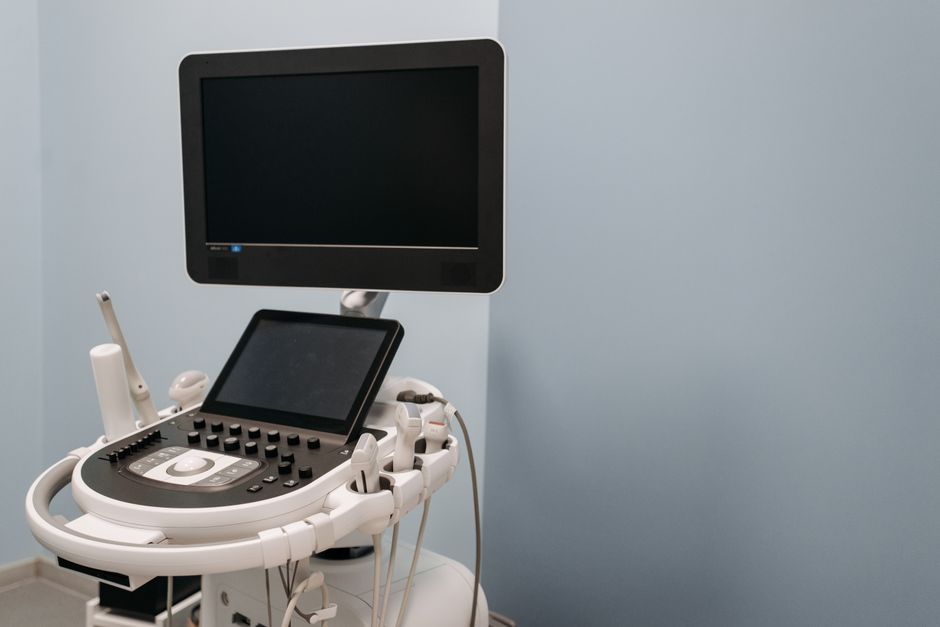
An ultrasound confirms where the pregnancy is and how many weeks it is before any procedure. Illustrative photo.
The law in Korea
Is abortion legal in Korea in 2026? A timeline
Korea's abortion law is in an unusual position. In April 2019 the Constitutional Court ruled that the Criminal Act provisions punishing abortion were incompatible with the Constitution and gave the National Assembly until the end of 2020 to write new rules. No replacement law was passed, so those provisions lost effect on 1 January 2021. Since then there has been no single statutory framework setting time limits or conditions for elective abortion.
As of October 2026, bills from different parties remain under discussion. According to reporting by the Kyunghyang Shinmun in September 2026, proposals range from allowing abortion by surgery or medication with insurance coverage, to bills that would set limits at 10 weeks under the Criminal Act or 22 weeks under the Mother and Child Health Act. None had been passed at the time of this review. Separately, very late cases have been prosecuted under other laws: a 2026 appeal case involving a pregnancy at 36 weeks was widely reported. This page describes the situation; it is not legal advice, and Dr. Park explains how it applies to you.
Compare
Surgical abortion vs the abortion pill: how do they differ?
Internationally, both methods are considered safe and effective in early pregnancy, and the choice usually depends on gestational age, medical history and personal preference. In Korea, the comparison is still partly theoretical: as of October 2026 the abortion pill is not approved, so pills sold online are unregulated. The government's plan would make mifepristone available for pregnancies up to 9 weeks, prescribed and dispensed by doctors in medical institutions for the first two years.
The differences below describe each method as it is used where both are available. See our abortion pill page for more detail on the medication method and its status in Korea.
| Compare | Surgical (vacuum aspiration) | Abortion pill (mifepristone + misoprostol) |
|---|---|---|
| Status in Korea | Provided by medical institutions under their own policies | Not approved as of October 2026; target early 2027, up to 9 weeks |
| Where it happens | At the clinic, in one visit | Tablets at the clinic and/or at home |
| Time | Procedure about 10–15 minutes | Process over one to two days |
| Anesthesia | Local anesthesia or sedation | Pain relief tablets |
| Main considerations | Small procedural risks such as infection or, rarely, perforation | Heavier bleeding and cramping at home; occasional need for a follow-up procedure |
 Hommage · Gangnam
Hommage Women's Clinic · Gangnam, Seoul
A private consultation covers every option, with no pressure to decide on the day. Illustrative photo.
Your consultation
Unplanned pregnancy in Seoul: what a consultation covers
Many women come to a first appointment unsure of what they want, and that is completely normal. The purpose of the consultation is to give you accurate medical information so you can make your own decision. Dr. Park does not steer you toward any choice, and your decision is respected whatever it is, including continuing the pregnancy.
- Confirming the pregnancy A pregnancy test and ultrasound show whether the pregnancy is in the uterus and how many weeks it is.
- Ruling out urgent problems Such as an ectopic pregnancy or an early miscarriage, which need different care.
- All your options Continuing the pregnancy with antenatal care, or ending it, with the current legal situation in Korea explained plainly.
- Your health Medical history, medicines, blood type and any infection checks that are relevant.
- Time to think You can go home and decide later; follow-up questions can be sent by message.
- Support If you feel pressured by anyone, or are unsafe, tell the doctor. Support can be arranged.
Healing
Recovery after surgical abortion: a day-by-day timeline
Recovery after an uncomplicated first-trimester vacuum aspiration is usually quick. Cramping is strongest in the first hours, bleeding or spotting comes and goes and then tapers off over up to about two weeks, and most people return to light activity within a day or two. Ovulation can return within two weeks, before your next period, so contraception should be in place before you have sex again if you want to avoid another pregnancy. Tell the clinic if your period has not returned within a few weeks or if pregnancy symptoms continue.
Aftercare
After a surgical abortion: do's and don'ts
Good aftercare lowers the risk of infection and helps you notice early if something is not right. You receive written instructions before you leave, and you can contact the clinic by message with any questions while you recover.
Do
- Rest for the remainder of the day
- Use pads, not tampons, while you bleed
- Take pain relief and any prescribed medicine as directed
- Shower normally and keep the area clean
- Start contraception straight away if you want to avoid pregnancy
- Keep your follow-up appointment
Don't
- Have sex or insert anything into the vagina for about a week
- Swim or use baths and saunas for about a week
- Drive or drink alcohol on the day if you had sedation
- Ignore fever, heavy bleeding or worsening pain
- Assume pregnancy symptoms will vanish overnight; they fade over days
- Hesitate to ask for emotional support if you need it
 Hommage · Gangnam
Hommage Women's Clinic · Gangnam, Seoul
Rest for the rest of the day; most people feel able to return to light activity within a day or two. Illustrative photo.
Evidence
Is surgical abortion safe? What the research says
First-trimester vacuum aspiration is one of the most frequently studied procedures in gynecology. A systematic review of 57 studies by White and colleagues in 2015 found that major complications were uncommon and similar whether the procedure was done in an office clinic or a hospital. The figures below summarize that review and the World Health Organization's data. Most of the evidence comes from countries with established, regulated abortion services, which is one reason clear training and follow-up matter.
Hospital admission
Needed in 0.5% or fewer of procedures in most studies.
White et al., Contraception, 2015Repeat aspiration
For retained tissue, across 36 studies in all settings.
White et al., 2015Major perforation
Perforation needing repair or admission, in most studies.
White et al., 2015Deaths with safe abortion
Compared with over 200 per 100,000 where unsafe abortion is common.
WHO abortion fact sheet, 2025Foreign residents and visitors
Unplanned pregnancy in Seoul as a foreigner: what to know
Foreign residents, students and visitors in Seoul can have a confidential consultation and ultrasound at Hommage Women's Clinic in English. The first step is always the same: confirm and date the pregnancy and check that it is in the uterus. After that, Dr. Park explains what care is available in Korea under the current legal situation, and what your options would be at home if you plan to return there.
Practical points
- Contact us by WhatsApp, KakaoTalk or phone (+82 2-517-7125). Walk-ins are welcome during opening hours.
- Bring your passport or residence card, the date of your last period, and a list of your medicines and allergies.
- Ask about language support when you book; you should fully understand every step.
- Abortion care is not covered by National Health Insurance; costs are explained in writing beforehand.
- If a procedure is done, plan to stay in Seoul until the follow-up check, usually 1–2 weeks later, or arrange a check with your own doctor.
Please avoid online pills
Pills sold online in Korea are unregulated: their content and dose cannot be verified, and taking them without an ultrasound means an ectopic pregnancy could be missed. If you have already taken such pills, see a doctor promptly; you will be treated without judgment.
 Hommage · Seoul
Hommage Women's Clinic · Gangnam, Seoul
Seoul: the clinic is in Gangnam, a short walk from Sinnonhyeon Station. Illustrative photo.
 Hommage · Gangnam
Hommage Women's Clinic · Gangnam, Seoul
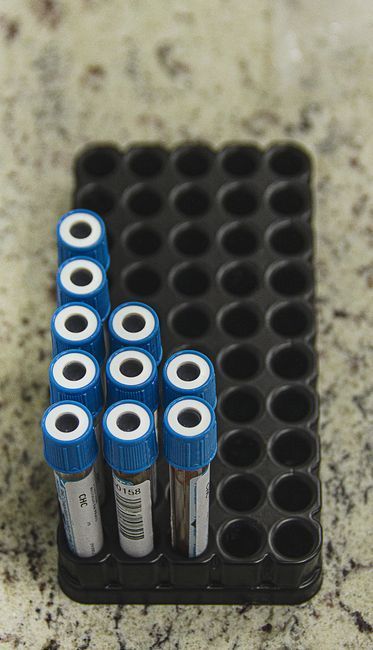
Blood type and infection checks are part of safe care before any procedure. Illustrative photo.
 Hommage · Gangnam
Hommage Women's Clinic · Gangnam, Seoul
You receive a written explanation of options, risks and costs before any treatment. Illustrative photo.
Choosing well
How to choose a safe clinic in Seoul
Because Korea has no single statutory framework yet, the quality and policies of clinics vary. These questions help you judge any clinic, including ours:
- Is the doctor an OB/GYN specialist? Check the doctor's profile and qualifications.
- Is an ultrasound done first? It confirms the location and weeks of pregnancy; it should never be skipped.
- Are all options explained without pressure? You should be given time and accurate information, whatever you decide.
- Is the plan and cost given in writing? Including anesthesia, medicines and follow-up.
- Is follow-up included? A check-up and a way to reach the clinic if you have problems.
- Is contraception discussed? Good care includes a plan for afterward, if you want one.
What affects the cost?
Abortion care is not covered by Korea's National Health Insurance, so costs are paid directly. The total depends on the weeks of pregnancy, the type of anesthesia (sedation adds an anesthesia fee), tests such as ultrasound, blood type and STD testing , medicines, and whether contraception such as an IUD is placed at the same time. You receive a written estimate before any treatment.
Your care
What to expect, step by step
01
Consultation
A private conversation about your situation, health history and questions, with no pressure to decide on the day.
02
Ultrasound and tests
Confirms the pregnancy location and weeks, with blood type and infection checks as needed.
03
Plan and consent
Your doctor explains the options, timing, risks and costs in writing before any treatment.
04
Follow-up
A check-up about 1–2 weeks later and a contraception plan if you want one.

Your doctor
Dr. Park Yuna
Medical Director · OB/GYN Specialist
Dr. Park believes every woman deserves accurate, unhurried information about her options. She confirms the medical facts first, explains the current situation in Korea plainly, and supports your decision without judgment.
OB/GYN specialist (Korea) and representative director of Hommage Clinic. Leads the clinic's women's health care, from screening and infections to hormones, contraception and fertility checks.
Surgical abortion: frequently asked questions
Is surgical abortion legal in Korea?
The criminal ban on abortion lapsed on January 1, 2021, after the Constitutional Court's 2019 ruling, and replacement legislation is still pending as of October 2026. There is no single statutory time limit for elective abortion, so medical institutions set their own policies. A doctor can explain how this applies to you.
Does surgical abortion hurt?
Most people feel cramping, similar to strong period pain, during the procedure and for a short time afterwards. Local anesthesia or sedation and pain relief medicine are used to keep you comfortable. Cramps usually settle within a few days.
How long does recovery take?
Most people return to light activity within a day or two. Bleeding or spotting can continue on and off for up to about two weeks. Avoid tampons, sex and swimming for about a week, or as your doctor advises.
Will a surgical abortion affect my future fertility?
An uncomplicated early abortion performed by a trained doctor is not associated with reduced future fertility. Rare complications such as severe infection or scarring inside the uterus can affect fertility, which is why follow-up and prompt treatment of any problems matter.
Is abortion covered by insurance in Korea?
No. Abortion care is not covered by Korea's National Health Insurance. The clinic explains costs in writing before any treatment.
Is the abortion pill an alternative in Korea?
Not yet. As of October 2026, the abortion pill is not approved in Korea, and the government plans to introduce it in 2027 for pregnancies up to 9 weeks. See the abortion pill in Korea.
How long does a surgical abortion take?
The procedure itself usually takes about 10–15 minutes. Including the consultation, preparation and rest afterwards, plan for a few hours at the clinic. If you have sedation, an adult should take you home and you should not drive that day.
How soon can I have a surgical abortion?
An ultrasound first needs to show that the pregnancy is in the uterus and how many weeks it is. Very early pregnancies may not yet be visible, in which case a repeat scan or blood test a few days later may be advised. Dr. Park explains the timing that applies to you at your consultation.
What are the warning signs after a surgical abortion?
Contact the clinic or seek urgent care if you have a fever, heavy bleeding soaking two pads an hour for two hours, severe or worsening abdominal pain, foul-smelling discharge, or pregnancy symptoms that continue after a week or two. In Korea, call 119 in an emergency.
When can I start contraception after a surgical abortion?
Usually straight away. Ovulation can return within two weeks, so pregnancy can happen again before your first period. Pills can be started the same day, and an IUD can often be placed at the time of the procedure. See birth control options.
Is my consultation confidential?
Yes. Your consultation and any treatment are confidential medical matters, and the clinic does not contact anyone else without your consent. If you feel pressured by anyone about your decision, or feel unsafe, please tell the doctor so support can be arranged.
Can foreigners get a pregnancy consultation in Seoul?
Yes. Foreign residents and visitors can book a confidential consultation and ultrasound with Dr. Park Yuna in English. Bring your passport or residence card and the date of your last period, and ask about language support when you book.
Is it safe to buy abortion pills online in Korea?
No. As of October 2026 abortion pills are not approved in Korea, so pills sold online are unregulated and their content and dose cannot be checked. Taking them without an ultrasound also risks missing an ectopic pregnancy. If you have already taken pills, see a doctor promptly; you will be treated without judgment.
References
Sources used for this page, reviewed by Dr. Park Yuna, OB/GYN specialist. Read our editorial and medical review policy.
- World Health Organization. Abortion. Fact sheet, updated 8 December 2025. WHO
- White K, Carroll E, Grossman D. Complications from first-trimester aspiration abortion: a systematic review of the literature. Contraception. 2015;92:422–438.
- National Institute for Health and Care Excellence. Abortion care. NICE guideline NG140 (last reviewed May 2025). NICE
- Constitutional Court of Korea. Decision on the abortion provisions of the Criminal Act, April 2019.
- Kyunghyang Shinmun. Reporting on the government plan to introduce mifepristone (16 September 2026) and on pending abortion legislation (17 September 2026).
- Amnesty International. South Korea: appeal decision for abortion case exposes legal vacuum, July 2026.
This page is general medical information, not legal advice, and does not replace a personal consultation. Legal information reflects the situation in Korea at the date of review and may change. Illustrations are original works of Hommage Women's Clinic, Gangnam, Seoul; photos marked illustrative are not of patients.
Related women's health services
Abortion Pill in Korea
The approval status of medical abortion in Korea and the risks of pills bought online.
Pelvic Ultrasound
Confirms and dates a pregnancy and checks the uterus and ovaries.
IUD Insertion
Long-acting contraception that can often be started right after an abortion.
Emergency Contraception
Options after unprotected sex, and how quickly they need to be used.
STD Testing
Confidential tests for chlamydia, gonorrhea and other infections.
Birth Control
Choosing a contraception method that suits you.
Get confidential, accurate advice
Book a private consultation with female OB/GYN specialist Dr. Park Yuna in Gangnam to confirm your pregnancy and understand your options.
Hommage Clinic · 4F, Building A, 509 Gangnam-daero, Seoul (near Sinnonhyeon Station) · Mon & Fri 10:00–20:00 · Tue–Thu 10:00–19:00 · Sat 10:00–15:00