
Gynecology · Tests & screening
Premarital Health Check in Seoul: What the Women's Exam Includes
A premarital health check is a set of tests before marriage or planning a pregnancy that looks for infections, immunity gaps and gynecological conditions you can treat or prevent in advance. It usually includes a pelvic exam and ultrasound, Pap and HPV tests, an STD panel, rubella and hepatitis B immunity and basic blood tests. At Hommage Clinic in Gangnam, Seoul, OB/GYN specialist Dr. Park Yuna performs and reviews it.

Quick answer
A premarital health check is a one-visit screening before marriage or pregnancy. At Hommage Women's Clinic in Gangnam, Seoul, OB/GYN specialist Dr. Park Yuna combines a pelvic exam and ultrasound, Pap/HPV test, STD panel, rubella and hepatitis B immunity, blood count and thyroid tests. The visit takes about 30–60 minutes, most results arrive within about 2 weeks, and the best time is 3–6 months before the wedding or trying to conceive.
Key takeaways
- The check finds treatable problems early: infections, anemia, thyroid changes, fibroids or cysts, and gaps in immunity.
- If you are not immune to rubella, the MMR vaccine is given before pregnancy, and pregnancy should be avoided for at least 4 weeks afterward.
- Anyone who could become pregnant is advised to take 0.4–0.8 mg of folic acid daily, starting at least a month before conception.
- Your results are yours. Sharing them with your partner is your decision.
Infographic
The premarital health check in numbers
Ideal timing
Before the wedding or trying to conceive, to leave time for treatment and vaccines.
Visit length
Consultation, exam, ultrasound and samples in one visit.
Results
Most results within a few working days; some take up to about 2 weeks.
After MMR
Avoid pregnancy for at least 4 weeks after a rubella (MMR) vaccine.
Folic acid daily
From at least 1 month before conception (USPSTF, grade A).
Hepatitis B vaccine
Given over about 6 months if you are not immune.
The premarital health check at a glance
| Key fact | Details |
|---|---|
| What it is | A pre-marriage or pre-pregnancy check of reproductive, sexual and general health |
| Typical tests | Pelvic exam and ultrasound, Pap/HPV, STD panel, rubella and hepatitis B, blood count, thyroid |
| Optional add-ons | AMH (ovarian reserve), blood sugar, liver and kidney function, other immunity tests |
| Timing | Ideally 3–6 months before the wedding or trying to conceive; avoid your period |
| Visit length | Usually about 30–60 minutes, plus a results visit |
| Results | Most within a few working days to about 2 weeks |
| Reviewed by | Dr. Park Yuna, OB/GYN specialist |
A premarital check is useful if you
- Are getting married or moving in together and want a health baseline
- Plan to try for a baby in the next year or so
- Are unsure whether you are immune to rubella or hepatitis B
- Have not had a Pap smear or STD screening in the last few years
- Have irregular or painful periods you have never had checked
Book a medical appointment sooner instead if you have
- Pelvic pain, fever or unusual discharge now: these need prompt assessment, not a routine check
- A positive pregnancy test: book early pregnancy care rather than a premarital panel
- Severe pelvic pain or heavy bleeding: seek urgent care
What is a premarital health check?
A premarital health check is a planned health screening before marriage or pregnancy. In Korea it is common for couples to have one, often called a pre-wedding or bridal check-up, and many women use it as their first comprehensive gynecological exam.
The aim is practical: to find infections, immunity gaps and conditions such as fibroids, ovarian cysts, anemia or thyroid problems early, while there is time to treat them or vaccinate before pregnancy. It is not a test of whether you are "fit" to marry, and your results belong to you. Sharing them with your partner is your choice.
What does a premarital health check include?
A typical women's premarital panel combines an examination with laboratory tests. Dr. Park adjusts it to your age, history and plans:
- Pelvic exam and ultrasound: a pelvic ultrasound checks the uterus and ovaries for fibroids, polyps, cysts or endometriosis-related changes.
- Cervical screening: a Pap smear , often with an HPV test, looks for precancerous cervical changes.
- STD panel: commonly chlamydia, gonorrhea, syphilis and HIV, with other infections as needed. See STD testing .
- Immunity: rubella antibodies (rubella in pregnancy can cause serious birth defects) and hepatitis B surface antigen and antibodies.
- Blood tests: complete blood count for anemia, blood type including Rh factor, and thyroid function (TSH). Blood sugar, liver and kidney function and a urine test are often added.
- Optional: an AMH test to estimate ovarian reserve, varicella immunity, or other hormone tests if your periods are irregular.
When should you have a premarital health check?
Ideally 3–6 months before your wedding or before you start trying to conceive. This leaves time to treat any infection, repeat an unclear test, and complete vaccinations that need a gap before pregnancy.
Book on a day when you are not having your period, because bleeding can affect the Pap smear and urine test. Avoid sex, vaginal creams and douching for about 48 hours before. Fasting for 8–12 hours is only needed if blood sugar or cholesterol are tested; we will tell you when you book. Bring any previous vaccination records or test results.
What happens if a result is abnormal?
Most findings are common and manageable, and finding them before pregnancy is the point of the check. Dr. Park explains each result and what to do next:
- Not immune to rubella: an MMR vaccine is recommended, and you should avoid pregnancy for at least 4 weeks afterward.
- Not immune to hepatitis B: a three-dose vaccine series over about 6 months. If you carry hepatitis B, you are referred for liver care, and your baby can be protected at birth.
- An STI: most are treated with a short course of antibiotics, and your partner should be treated too.
- Abnormal Pap or high-risk HPV: a repeat test or colposcopy , depending on the result. HPV vaccination may also be discussed; see HPV vaccine .
- Anemia or thyroid problems: treated before pregnancy, when it matters most.
- Fibroids, cysts or a low AMH: monitored or treated, and factored into your plans for pregnancy timing.
Risks and limitations of premarital screening
The tests themselves are low risk. The pelvic exam and swabs may cause brief pressure or mild cramping, and some women have light spotting afterward. A transvaginal ultrasound can feel like mild pressure; a transabdominal scan can be used if you are not sexually active. Blood tests can leave a small bruise. Call the clinic if you have pain, fever or bleeding that worsens after your visit.
No check-up can predict every future problem. Screening tests can occasionally give false-positive or false-negative results, and infections caught after the test will not show up. A normal AMH does not confirm fertility, and a low AMH does not rule it out. Your partner's health matters as well, and a premarital check for men, including semen analysis if desired, is done at a urology clinic or health screening center.
Premarital health check at Hommage Clinic
Hommage Clinic is a women's clinic in Gangnam, a short walk from Sinnonhyeon Station. Your check is performed by Dr. Park Yuna, a female OB/GYN specialist, with the pelvic ultrasound and sample collection done in the same visit and results explained in person. See our othergynecology services, includingbirth controlif you want to delay pregnancy for now.
Walk-ins are welcome during opening hours. Premarital screening done without symptoms is generally not covered by National Health Insurance, although some tests for a medical reason may be. Some local public health centers also offer basic screening for eligible residents; eligibility varies by district. The cost depends on which tests you choose, and you receive a written quote before testing.
The test panel
What a premarital health check includes, and why each test matters
A women's premarital health check is not one test but a small panel, and each part answers a different question. The pelvic exam and pelvic ultrasound look at the uterus and ovaries. The Pap smear and HPV test screen the cervix. The STD panel looks for infections that often cause no symptoms but can affect fertility or be passed on. Blood tests check immunity, blood count, blood type and thyroid function.
The value of the check comes from timing. Several of these findings are simple to fix before pregnancy but harder to manage during it: a rubella vaccine cannot be given in pregnancy, an untreated chlamydia infection can damage the fallopian tubes, and thyroid problems and anemia are easier to correct beforehand. The map below shows the standard panel at Hommage Women's Clinic; Dr. Park adds or removes tests based on your age, history and plans.
 Hommage · Gangnam
Hommage Women's Clinic · Gangnam, Seoul
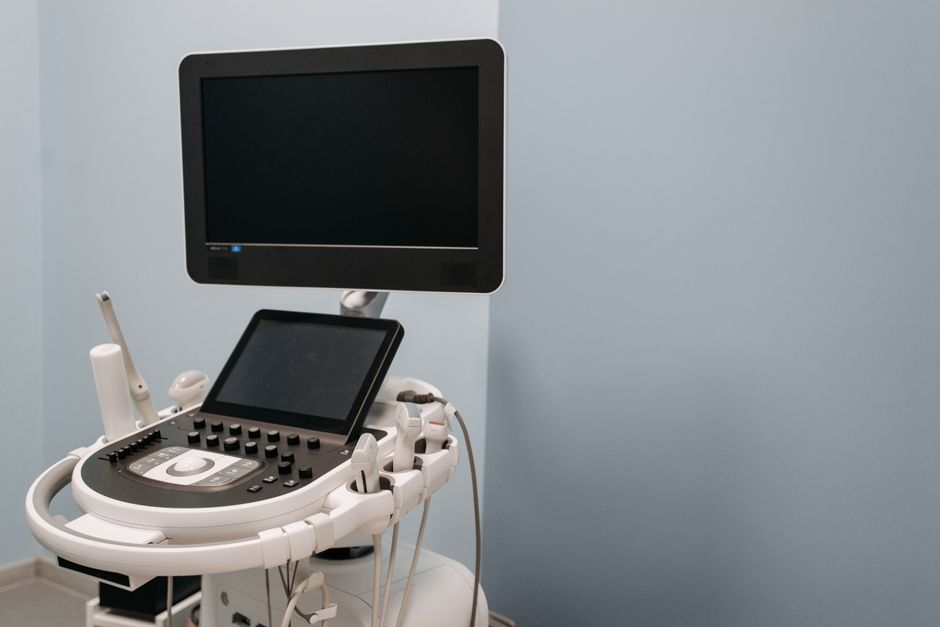
The pelvic ultrasound is done in the same visit as the exam and samples. Illustrative photo.
Planning ahead
Premarital health check timeline: from 6 months before the wedding
The reason we suggest testing 3–6 months ahead is simple arithmetic. If an infection is found, treatment and a test of cure take a few weeks. If you are not immune to rubella, the MMR vaccine is given and pregnancy should be avoided for at least 4 weeks. If you are not immune to hepatitis B, the vaccine is a series of three doses over about 6 months, and you are partly protected after the first doses. Folic acid should be started at least a month before you try to conceive. Starting early means none of these steps has to be rushed or squeezed around wedding preparations.
If your wedding is sooner, the check is still worthwhile. Dr. Park prioritizes the tests and vaccines that matter most for your timeline, and anything that cannot be finished beforehand can continue after the wedding.
 Hommage · Gangnam
Hommage Women's Clinic · Gangnam, Seoul
Your test list is agreed with the doctor at the start of the visit. Illustrative photo.
Which check do you need?
Premarital check vs well-woman exam vs preconception visit
These three names overlap, and clinics in Korea use them in different ways. A well-woman exam is a routine check you can repeat every year at any stage of life. A premarital check is a one-time, broader panel timed before marriage, with extra focus on immunity and infections that matter for a future pregnancy. A preconception visit is for couples who are about to try for a baby and adds advice on folic acid, medicines, weight and timing, and sometimes ovulation testing .
In practice, many women combine them: a premarital check now, and a short preconception review when they decide to start trying.
| Compare | Premarital check | Well-woman exam | Preconception visit |
|---|---|---|---|
| When | Once, 3–6 months before marriage | Every year | Before trying to conceive |
| Focus | Infections, immunity, uterus and ovaries | Screening and general gynecology | Pregnancy readiness |
| Typical extras | Rubella, hepatitis B, blood type, optional AMH | Contraception advice | Folic acid, medicines review, ovulation timing |
| Repeat? | Not usually | Yes, yearly | Before each planned pregnancy |
Before your visit
How to prepare for a premarital health check
A little preparation makes the results more reliable and the visit shorter. The most important step is choosing the right day: menstrual blood can make a Pap smear harder to read and can affect the urine test, so book on a day when you are not bleeding, ideally a few days after your period ends.
For about 48 hours before, avoid sex, vaginal creams, lubricants and douching, which can affect the cervical sample. Fasting is only needed if blood sugar or cholesterol are included; if so, you will be told to have only water for 8–12 hours. If you are nervous about the internal exam, or have never had one, tell us when you book. A transabdominal ultrasound and a smaller speculum can be used, and you can ask to pause at any time.
Do
- Book a day when you are not on your period
- Bring vaccination records and earlier test results
- List your medicines, supplements and allergies
- Note the first day of your last period
- Tell us if you have never had a pelvic exam
- Wear a skirt or loose trousers for comfort
Don't
- Have sex in the 48 hours before
- Use vaginal creams, lubricants or douches beforehand
- Eat before the visit if fasting tests are booked
- Skip the results visit; abnormal results need a plan
- Assume an old test still counts if it was years ago
 Hommage · Gangnam
Hommage Women's Clinic · Gangnam, Seoul
Choose a day when you are not on your period, 3–6 months before the wedding. Illustrative photo.
Understanding your results
Rubella and hepatitis B immunity results: what happens next
Immunity tests are the part of the premarital check most likely to lead to action, because they can be fixed with a vaccine but only before pregnancy. Rubella (German measles) is usually mild in adults, but infection during pregnancy, especially in the first 12 weeks, can cause miscarriage, stillbirth or serious lifelong birth defects known as congenital rubella syndrome. The rubella vaccine is part of the MMR vaccine, which is a live vaccine and is not given during pregnancy. That is why the test is done now.
Hepatitis B can be passed from mother to baby at birth. If you are already protected, nothing more is needed. If you are not, a three-dose vaccine series is started. If the test shows you carry the virus, you are referred for liver care, your partner is offered testing and vaccination, and your baby can be protected with vaccination at birth. The diagram below shows the usual next steps.
 Hommage · Gangnam
Hommage Women's Clinic · Gangnam, Seoul
Daily folic acid is advised from at least a month before trying to conceive. Illustrative photo.
Beyond the tests
Folic acid, lifestyle and your partner's check
A premarital check is also a good moment for advice that does not need a lab. The US Preventive Services Task Force recommends that everyone who is planning or could become pregnant take a daily supplement with 0.4–0.8 mg (400–800 mcg) of folic acid, starting at least one month before conception and continuing through the first 2–3 months of pregnancy, to lower the risk of neural tube defects such as spina bifida. Because nearly half of pregnancies in the United States are unplanned, the advice applies even if a baby is not your immediate plan. Some women need a higher dose, for example after a previous affected pregnancy or with certain medicines; Dr. Park will tell you if that applies to you.
Medicines and lifestyle
Bring a list of every medicine and supplement you take. Some acne, epilepsy, blood pressure and mood medicines need to be reviewed or changed before pregnancy, but never stop a prescribed medicine on your own. Stopping smoking, limiting alcohol and reaching a healthy weight all help both fertility and pregnancy.
Your partner
Infections such as chlamydia, syphilis and hepatitis B affect both partners, and treating only one person risks reinfection. Hommage Women's Clinic focuses on women's health, so your partner's check, including semen analysis if wanted, is done at a urology clinic or health screening center. Many Seoul district public health centers (bogeonso) also offer a free basic premarital blood panel for engaged or newly married couples who live in that district; the tests and eligibility differ by district.
Evidence
Is a premarital health check worth it? What the evidence says
There is no single trial proving that a premarital check package improves outcomes as a whole. The case for it rests on the individual parts: each test or step is recommended on its own by public health bodies, and the check simply bundles them at a useful time. That is also why we do not recommend tests that lack evidence for women without symptoms, and why the panel is tailored rather than sold as the largest possible package.
Folic acid before pregnancy
0.4–0.8 mg daily for anyone planning or able to become pregnant.
USPSTF, 2023Start before conception
The critical window begins at least a month before conception and runs 2–3 months into pregnancy.
USPSTF, 2023Highest rubella risk
Rubella does the most harm in the first 12 weeks of pregnancy.
CDC, Pregnancy and RubellaPregnancies unplanned
Nearly half of US pregnancies are unplanned, so prevention has to start early.
USPSTF summary, Am Fam Physician 2023Traveling to Seoul
Premarital health check in Seoul for international patients and foreign residents
Many couples marrying in Korea, or marrying a Korean partner, have their premarital check in Seoul. Hommage Women's Clinic is in Gangnam, a short walk from Sinnonhyeon Station (Line 9 and Shinbundang Line), and the whole women's check is done in one visit with a female OB/GYN specialist.
How long to stay
- Plan two visits: the check itself, then a results visit about 1–2 weeks later. If you cannot stay, results can be explained by message or a call on a date agreed in advance.
- If you need an MMR or hepatitis B vaccine, the first dose can often be given at the results visit, and the remaining hepatitis B doses at home.
What to bring
- Passport or residence card, and any vaccination records (translated if possible)
- Earlier Pap, HPV or STD results, and a list of medicines and allergies
- If you need a written report for an official purpose, the exact requirements, sent before your visit
Send your preferred dates and questions by WhatsApp, KakaoTalk or the contact form , and tell us if you need language support.
Check day
Consultation, exam, ultrasound and samples, about 30–60 minutes.
Lab results
Most return within a few working days; some take up to about 2 weeks.
Results & plan
In person, or by message or call on an agreed date; vaccines if needed.
 Hommage · Seoul
Hommage Women's Clinic · Gangnam, Seoul
Gangnam, Seoul: the clinic is a short walk from Sinnonhyeon Station. Illustrative photo.
 Hommage · Gangnam
Hommage Women's Clinic · Gangnam, Seoul
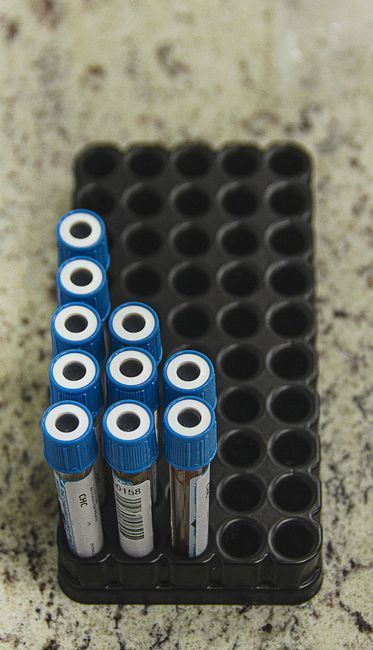
Immunity, blood count, blood type and thyroid tests come from one blood draw. Illustrative photo.
Choosing well
How to choose a premarital health check clinic in Seoul
Premarital packages in Seoul range from a few blood tests to long lists of scans. A bigger package is not automatically better. Use these questions at any clinic, including ours:
- Is an OB/GYN specialist doing the exam? The ultrasound and pelvic exam should be done and read by a gynecologist.
- Is the panel tailored to me? Your age, history and plans should shape the list, not a fixed package.
- Will a doctor explain the results? A results visit or call with a clear plan matters more than a printout.
- Can vaccines and treatment be done in the same place? It saves time if something needs follow-up.
- Are my results confidential? Results should go to you only, unless you choose to share them.
- Do I get a written quote first? Know which tests are included before any sample is taken.
What affects the cost of a premarital health check?
The cost depends mainly on which tests are included: optional tests such as AMH, extra immunity tests or a wider STD panel add to it, as do any vaccines you need afterward. Screening done without symptoms is generally not covered by National Health Insurance, although a test done for a medical reason may be. You receive a written quote before any test, and you can compare it with the free basic panel some district public health centers offer to eligible residents.
Your visit
What to expect at your premarital health check
01
Consultation
Dr. Park reviews your health history, periods, vaccinations and plans, and agrees the list of tests with you.
02
Exam and ultrasound
A pelvic exam, Pap/HPV sample and pelvic ultrasound, done gently with the option to pause at any time.
03
Blood and urine tests
Samples for STD screening, immunity, blood count, thyroid and any optional tests such as AMH.
04
Results and plan
We explain your results, usually within about 2 weeks, and arrange treatment or vaccination if needed.

Your doctor
Dr. Park Yuna
Medical Director · OB/GYN Specialist
Dr. Park tailors the premarital panel to your age, history and plans rather than offering a one-size package, and explains every result in person. If something needs treatment or vaccination, she plans it around your wedding and pregnancy timing.
OB/GYN specialist (Korea) and representative director of Hommage Clinic. Leads women's health care, labiaplasty and other cosmetic gynecology procedures.
Premarital health check: frequently asked questions
What tests are included in a premarital health check in Korea?
For women, a premarital check usually includes a pelvic exam and ultrasound, a Pap smear with or without HPV testing, an STD panel such as chlamydia, gonorrhea, syphilis and HIV, rubella and hepatitis B immunity, a blood count, blood type and thyroid function. An AMH test for ovarian reserve can be added.
When should I get a premarital health check?
Ideally 3–6 months before your wedding or before trying to conceive. This allows time to treat any infection and complete vaccinations such as MMR, after which pregnancy should be avoided for at least 4 weeks. Choose a day when you are not on your period.
Do I need to fast before a premarital health check?
Usually not. Most tests in the panel do not require fasting. If blood sugar or cholesterol are included, you may be asked not to eat for 8–12 hours beforehand; water is fine. We will confirm when you book, based on the tests you choose.
Should my partner also have a premarital check?
It is recommended. Infections such as chlamydia or hepatitis B affect both partners, and a man's check can include STD tests, hepatitis B, blood tests and semen analysis. Hommage Clinic focuses on women's health, so your partner can have his check at a urology clinic or health screening center.
Is AMH testing part of a premarital check?
It is a common optional add-on. AMH estimates how many eggs remain in your ovaries and can help with planning when to try for a baby or whether to consider egg freezing. It does not measure egg quality or predict natural fertility on its own. See our AMH test page.
Can foreigners get a premarital health check in Seoul?
Yes. International patients and foreign residents can book a premarital check at Hommage Clinic. Bring your passport or residence card and any vaccination records. If you need a written report for an official purpose, tell us the requirements in advance. Please contact us before your visit to arrange language support when you book an appointment.
Does a premarital health check hurt?
Most women feel only brief pressure. The Pap sample and pelvic exam can cause mild cramping for a moment, and the blood test is a quick needle. If you have never had an internal exam, tell us; a transabdominal ultrasound and a smaller speculum can be used, and you can ask to stop at any time.
Can I have a premarital check if I have never had sex?
Yes. The exam is adapted: the ultrasound can be done through the abdomen instead of the vagina, and the internal exam and Pap smear may be left out or postponed. Blood tests for immunity, blood count and thyroid are the same for everyone.
Should I start folic acid before marriage?
If you could become pregnant, yes. The US Preventive Services Task Force recommends a daily supplement with 0.4–0.8 mg (400–800 mcg) of folic acid, starting at least one month before conception and continuing through the first 2–3 months of pregnancy. Some women need a higher dose; Dr. Park will advise you.
What if I am not immune to rubella?
You are offered the MMR (measles, mumps and rubella) vaccine. Because it is a live vaccine, it is not given during pregnancy, and you should avoid becoming pregnant for at least 4 weeks after the dose. That is one reason to have the check several months before the wedding.
How long do premarital health check results take?
Most results are ready within a few working days, and some, such as certain Pap or HPV results, can take up to about 2 weeks. Dr. Park explains them at a results visit, or by message or call on an agreed date if you live abroad.
Will my results be shared with my partner or family?
No. Your results are confidential and are given only to you. Whether you share them with your partner is entirely your choice. If you need a written report for an official purpose, it is prepared only at your request.
Is a public health center premarital check enough?
Some Seoul district public health centers offer a free basic blood panel for eligible engaged or newly married residents, which can cover immunity, blood count and infection tests. These panels usually do not include a pelvic exam, ultrasound or Pap smear, so many women combine the two. Eligibility and tests differ by district.
References
Sources used for this page, reviewed by Dr. Park Yuna, OB/GYN specialist. Read our editorial and medical review policy.
- US Preventive Services Task Force. Folic acid supplementation for the prevention of neural tube defects: final recommendation statement. 2023. USPSTF
- Folic acid supplementation for the prevention of neural tube defects: clinical summary of the USPSTF recommendation. Am Fam Physician. 2023;108(3):287A–287B. AAFP
- Centers for Disease Control and Prevention. Pregnancy and rubella. Updated 2025. CDC
- Centers for Disease Control and Prevention. Vaccines and pregnancy: recommended vaccines. CDC
- Geumcheon-gu Public Health Center, Seoul. Premarital and pre-parent health check program (example of a district public health center panel). geumcheon.go.kr
This page is general information and does not replace a personal consultation. Illustrations are original works of Hommage Women's Clinic, Gangnam, Seoul; photos marked illustrative are not of patients.
Related screening and women's health services
Well-Woman Exam
A routine annual women's health check with screening, contraception and sexual health advice.
STD Testing
Confidential testing for chlamydia, gonorrhea, syphilis, HIV and other infections.
AMH Test
A blood test that estimates ovarian reserve for pregnancy and egg-freezing planning.
Pelvic Ultrasound
A scan of the uterus and ovaries to check for fibroids, cysts and other changes.
HPV Vaccine
HPV vaccination for adult women, including Gardasil 9, and how it fits with screening.
Ovulation Testing
Follicle-tracking ultrasound and blood tests when you start trying to conceive.
Start married life with a clear health picture
Book a premarital health check with Dr. Park Yuna in Gangnam, ideally 3–6 months before your wedding or trying to conceive.
Hommage Clinic · 4F, Building A, 509 Gangnam-daero, Seoul (near Sinnonhyeon Station) · Mon & Fri 10:00–20:00 · Tue–Thu 10:00–19:00 · Sat 10:00–15:00